




















Golf improvement doesn’t come from hitting bucket after bucket and hoping something sticks. It never really did, if we’re being honest, but golfers are finally catching on. The better training aids on shelves right now hand out instant, unfiltered feedback on wrist angle, swing speed, contact quality — the stuff that used to take a coach’s trained eye to spot. None of that means buying every gadget with flashing lights is a smart move, though. Below is a look at the categories actually worth spending money on in 2026, based on what coaches, tour pros, and regular weekend golfers keep reaching for long after the novelty wears off.
Launch Monitors Have Become Genuinely Affordable
Not long ago, a personal launch monitor was the kind of purchase reserved for low-handicappers with cash to spare. That’s changed fast. Units like the Swing Caddie SC4 Pro now deliver carry distance, ball speed, swing speed, and smash factor at a price that would’ve seemed unbelievable five years ago. Many even include a built-in screen, so there’s no fumbling with a phone between swings at the range. Anyone tired of guessing whether a shot “felt right” instead of knowing for sure will find this one of the smarter buys available today.
Wearable Sensors Reveal What the Eye Cannot See
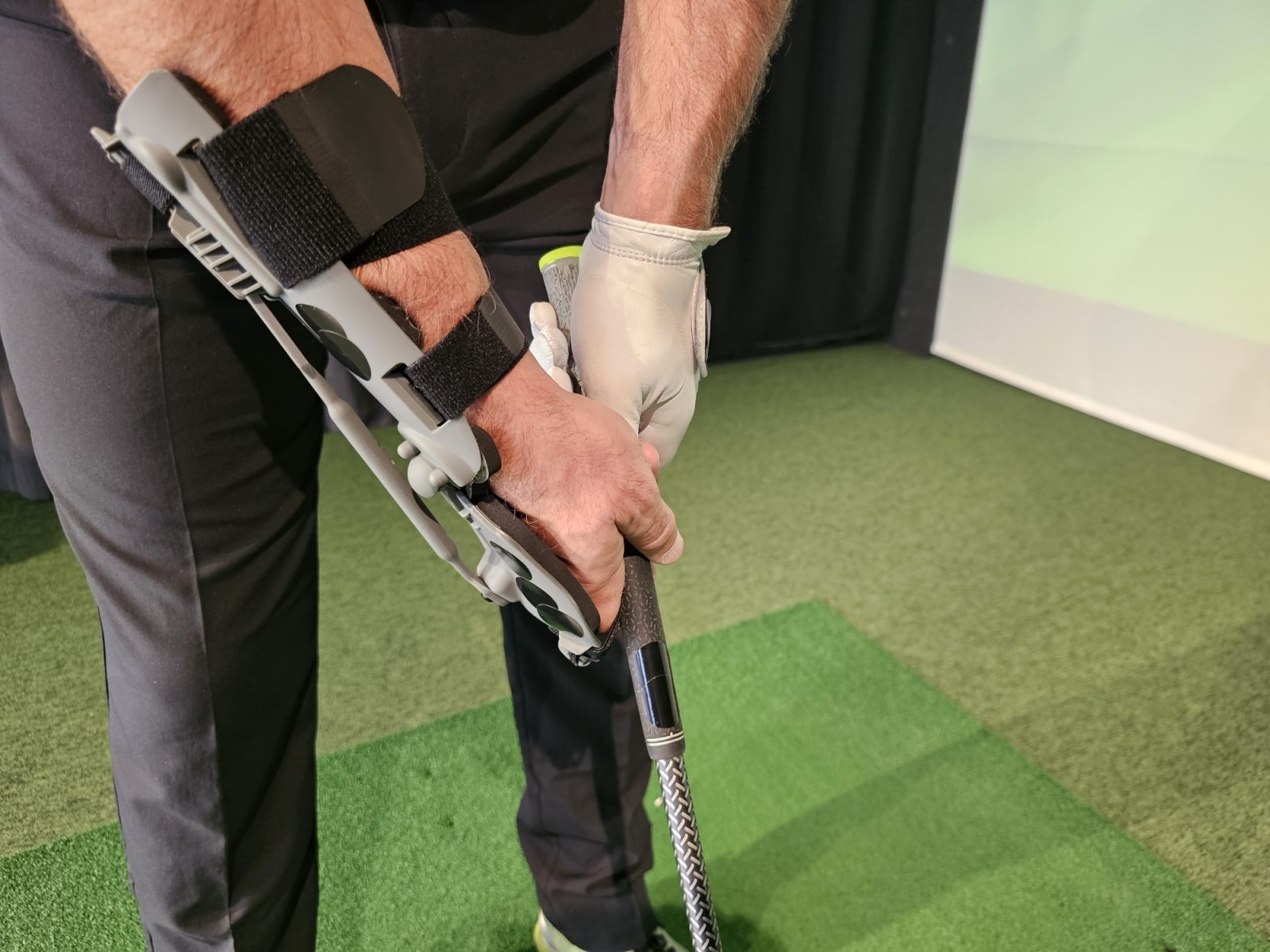
Nobody can actually watch their own wrist at the top of the backswing, and yet it wrecks more golf swings than almost anything else in the game. That’s the gap wearable sensors like HackMotion fill, buzzing in real time and quietly logging patterns that only show up after several sessions, not one lucky swing. Plenty of golfers strap one on expecting a minor tweak, only to find their wrists are cupped badly at the top or collapsing through impact. A little humbling, sure. But it’s also the kind of blunt, numbers-based feedback that moves the needle faster than hearing “square the clubface” for the 15th time.
Impact Feedback Tools Cut Through Self-Deception
There’s nothing subtle about a thin-faced training iron. Something like the ButterBlade doesn’t leave room for excuses, since a mishit toward the heel or toe is felt the instant it happens, not diagnosed later off a slow-motion video. That’s the whole draw of this category, really. No waiting on a launch monitor readout, no need for a coach’s opinion. The club just tells the truth.
Speed and Power Training Has Matured Into a Science
Chasing extra distance used to mean swinging harder and crossing fingers. Dan Frost, a PGA professional and tour coach whose training gear is reportedly used by more than 70 percent of DP World Tour players, sees it differently. He points to three things working in tandem — clubhead speed, energy transfer efficiency, and swing width — rather than raw effort alone. By his estimate, each additional mile per hour of efficiently delivered clubhead speed adds somewhere around two to three yards of carry. Resistance-band lag trainers build on that idea, training the trail wrist to hold its angle deeper into the downswing so speed doesn’t leak out through an early release.
Alignment and Setup Tools Remain the Best Value on the Market
It’s tempting to skip past the unglamorous stuff for something with an app attached, but almost nothing beats a plain old set of alignment sticks for the money. A look at feedback from golfers over fifty turned up the same gripe over and over: most amateurs aim noticeably right of target without realizing it, then compensate with an over-the-top move that ruins the shot anyway. Sticks run about $15 to $25 a pair. Few purchases in golf pay off that fast.
Putting Aids Continue to Offer the Fastest Scorecard Gains
Putting swallows up close to half of every round, which makes it a little baffling how little practice time most golfers actually give it. Weighted mats paired with break-simulating balls, along with laser-guided alignment tools, let golfers rehearse start line and face control without ever leaving the living room. Quite a few of these mats now bundle in video lessons too, turning a few idle minutes with a putter into something closer to real coaching.
Choosing Aids That Actually Transfer to the Course
This is where most buyers go wrong: chasing the flashiest option instead of the one that actually fixes a known problem. A training aid worth keeping builds a pattern that survives pressure, not a feeling that evaporates the moment nerves show up on the first tee. Before reaching for a credit card, a few blunt questions help. Does this target a fault that’s already been identified? Can it be used solo, without a coach hovering nearby? And will whatever it teaches hold up in an actual round, or just on a quiet driving range with no one watching?
Final Thoughts
Nothing about golf training aids in 2026 rewards buying in bulk. Launch monitors, wearable sensors, and lag trainers now offer insight once reserved for tour pros, while cheap staples like alignment sticks and putting mats still punch well above their price tag. Buying with a specific, already-diagnosed weakness in mind, instead of whatever looks impressive in an ad, remains the surest path to a lower scorecard.