





















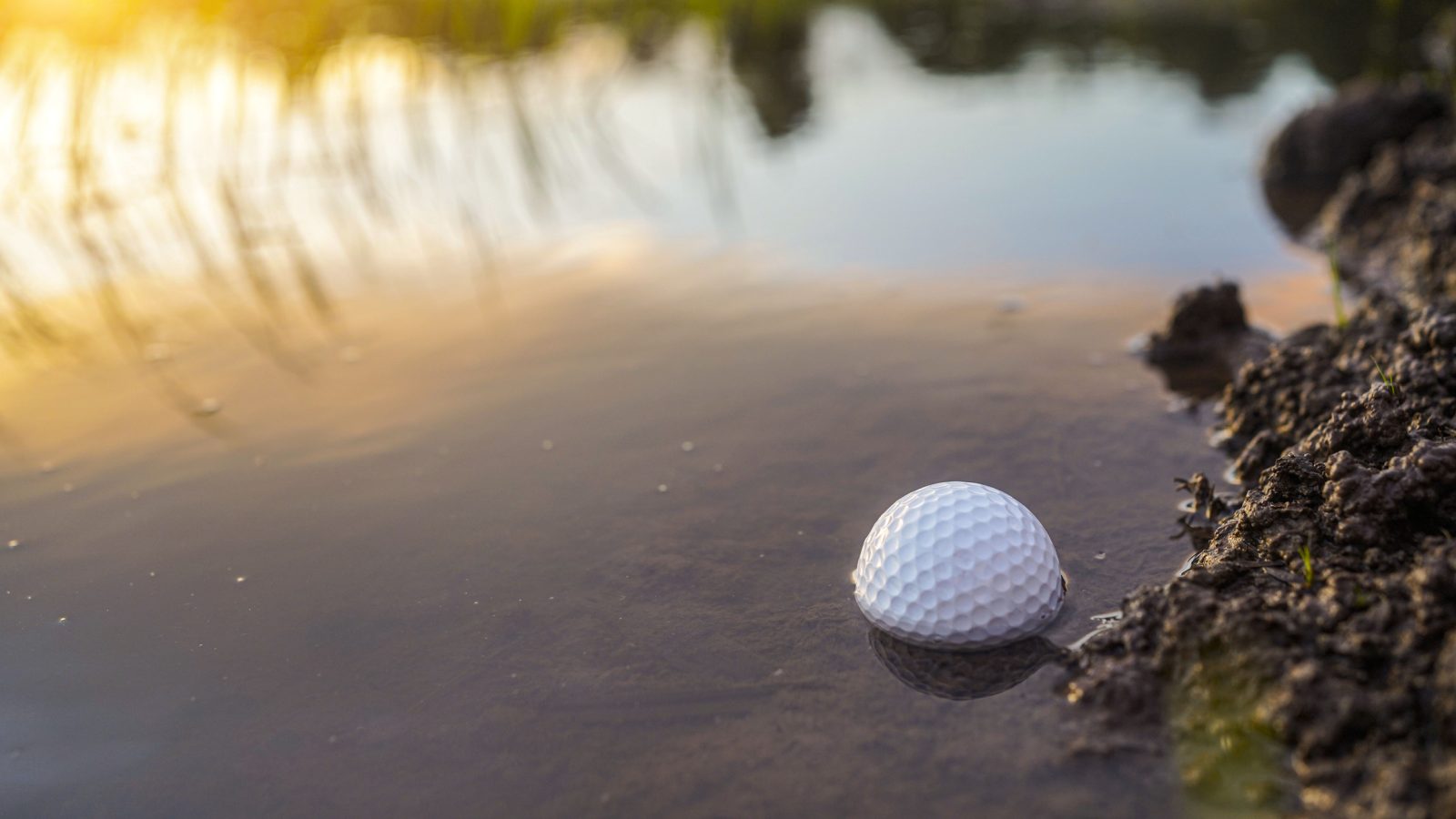
Every course has a graveyard, and it’s not tucked behind the maintenance shed. It’s sitting at the bottom of the ponds lining the fairways, where dimpled white balls pile up by the thousands like loose change nobody bothered to pick up. Somebody does eventually pick it up, though. That job falls to a small, oddly tough crew of professional golf ball divers, and they’ve turned other people’s shanks into a real living.
Where All Those Lost Balls Actually Go
Golfers in the U.S. lose a genuinely absurd number of balls every year — estimates run as high as 1.5 billion. A good chunk of that, somewhere around 200 million, ends up sitting underwater in hazards across the country. Most of it doesn’t stay down there for long.
Between divers, mechanical rollers, and dedicated retrieval outfits, roughly 100 million balls get hauled back out of course ponds annually. From there they’re sorted, scrubbed, sometimes re-coated, and sold again at a steep discount off retail. That cycle alone has quietly grown into a multimillion-dollar recycled ball business.
The Job Nobody Pictures When They Think About Golf
This isn’t some guy wading around with a net. Golf ball diving is an actual licensed profession, with contracts, insurance, and scuba certifications. Divers must be 18 or older and hold an unrestricted commercial diving certification before any course lets them near the water.
It usually starts with a negotiation. A diver, or the company backing them, locks in an exclusive deal with a course — sometimes ten, twenty properties at once. To earn the rights to a course’s ponds, the diver pays a fee, either in cash or by handing back a cut of whatever comes up out of the water.
A single course typically has four to twelve ponds, and one pond alone can be hiding anywhere from 500 to 2,000 balls on its floor. Clearing a whole course isn’t quick. Crews often log eight to ten hours underwater a day, and it can take more than one day to finish the job.
How the Recovery Actually Works
Two methods run this trade. A dive crew — usually three people — works the bottom slowly by feel, which is thorough but eats up time. A mechanical roller, towed behind a boat, moves faster but tends to leave balls buried in silt behind.
Visibility down there is often close to zero. Divers end up feeling their way through the muck with bare hands rather than actually seeing anything. It’s not pretty work, and the wildlife doesn’t help matters. Snapping turtles, water moccasins, and — especially in Florida — alligators come with the territory, and no certification course really prepares someone for that part.
The Money Behind the Muck
Given all that, the pay isn’t bad. Multiple sources put professional golf ball diver income somewhere between $50,000 and $100,000 a year, swinging based on region, how busy the course is, and the broader economy.
The math runs per ball. Divers usually pocket somewhere between seven and fifteen cents a ball, with pricier, top-tier balls bringing in more once they’ve been cleaned up. A solid dive session might pull several thousand balls, which can mean a few hundred dollars for one day’s work.
No pond, though, quite matches the reputation of the island green at TPC Sawgrass. It’s long been considered one of the richest hauls in the business — shallow water, constant foot traffic, and golfers who show up with their best balls for a hole practically designed to rattle nerves.
None of this is steady income, either. A lot of divers treat it as seasonal or part-time, picking up other underwater jobs like boat cleaning or bridge inspections when course contracts dry up.
The Rivalry Nobody Talks About
Wherever there’s money sitting in plain sight, competition follows, and this industry has its own quiet set of rules. Licensed divers pay for access and work under contract. But there’s also a shadow side to it — unauthorized collectors, sometimes called “nighthawks” or “night hunters,” who sneak onto courses after dark and take balls without paying anyone a cent.
Since every ball a poacher grabs is pure profit, and courses lose money when their ponds get raided early, secrecy has become part of the job. Few divers will say exactly how many balls a course tends to produce, and rival crews aren’t exactly comparing notes.
Why It Matters Beyond the Paycheck
There’s more to this than a quirky side hustle. Golf balls can sit for decades before they finally break down, and while they do, they leach microplastics and chemical residue into the surrounding water and soil. Every ball a diver hauls up and resells is one less piece of long-term waste left to rot in a hazard.
For golfers, buying recovered balls also just makes sense financially, and most players won’t notice a real drop in performance from using them. It’s one of those rare setups where saving money and reducing waste happen to line up.
The Bottom Line
Golf ball diving will never fill stadiums the way a Sunday at the Masters does, but it’s humming along quietly behind nearly every course with a water hazard. Part scavenging, part recycling, part small business — the whole thing runs on one simple fact: for every golfer watching a ball vanish beneath the surface, someone else is already gearing up to bring it back and sell it again.