



















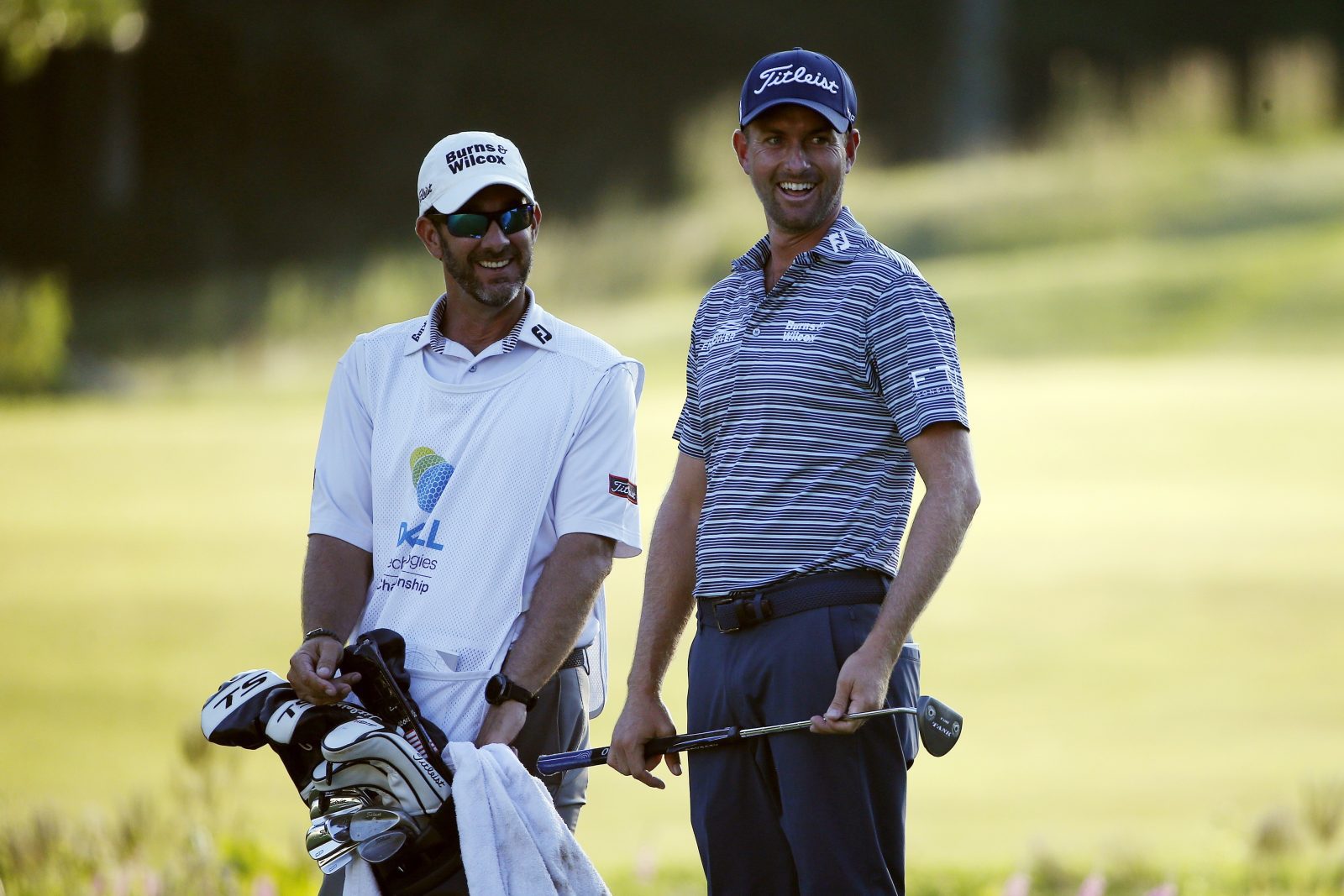
Q: Not to go into specifics, but I think people are interested in how much a caddy makes and how much he has to do on his own.
TESORI: An average PGA TOUR caddy makes a salary that’s $2,000 a week, and they make, I would say probably 8 percent of a made cut and 10 percent of a win. Obviously if you’re working for a top guy, it can be amazingly lucrative. The problem is we pay all of our expenses and expenses have gone through the roofs. You pay every hotel, every rental car, every flight, all your food, everything else. … If you play 30 events, your expenses are probably going to be right around a hundred grand. So you need somebody who’s playing well or it’s hard to make a living. Now you take a guy like Teddy Scott (Scottie Scheffler’s caddie) who made $6 million two years ago, that would be obviously the top, but there are guys who lose money every year doing the job, or at best break even. Obviously, the longer you’ve been out there or the more your reputation, those percentages can go up, that salary can go up, but that’s kind of that nice basic percentage.
Q: What satisfaction do you get out of caddying?
TESORI: Winning on the PGA TOUR as a caddie is the greatest thing. It feels like you won. And I really don’t think anybody would disagree with me. I’ve been fortunate to do it 23 times on TOUR. I’ve won, and every time is special. Again, when I was younger, I probably took it a little more for granted, but as I got older, I took nothing for granted and to be honest with you, not only winning, sometimes just having a chance to win, competing well, getting better. People asked when we came out of COVID and Webber won the second event, they asked me what did I miss the most? And I said, the process of getting better, the process of working towards success. I just love that stuff. I think that’s a lot of Vijay in me. … And the teamwork. I think the more someone includes you in what’s going on, the bigger part you are of that team, the more pride you feel when you get it done.
Q: What is the hardest part of the job?
TESORI: Hardest part of the job definitely is when things aren’t going well. … Look, it is a hard, hard game. When things aren’t going well and you’re traveling every week and you’re away from your family and your kids, it gets really hard and gets emotional. I’ve always said that when things are going good, our job is pretty easy. When things aren’t going well, our job is really hard, and that’s where we make our money because you have to make sure those down times don’t become a story. And it’s very easy for athletes to write a story: Oh, this is the way it’s going to be. This is who I am now. I’m never going to play well again. … You have to find ways to maintain positivity without being rah-rah because no one wants rah-rah when things are down.
Q: What’s the easiest part of the job?
TESORI: Easiest part of the job for sure is when your guy’s playing really well. It’s euphoric, it’s fun, it’s energetic. You’re in last groups, the fans are positive, your guy’s positive. You’re staying in the moment, you’re making a lot of money. You’re achieving the things that you wanted to achieve. … The next easiest part of the job is when I’m off, I’m off. If you’re working 28 weeks a year, you have 24 weeks a year where you are home. And I think people say, how do you leave your family for 28 or 30 weeks a year? I’m like, it is hard. It’s brutal. But I’m also home 22 weeks where I’m a dad seven days a week. I’m a husband seven days a week. So I think that’s the tradeoff.
Q: What’s your proudest moment as a caddy?
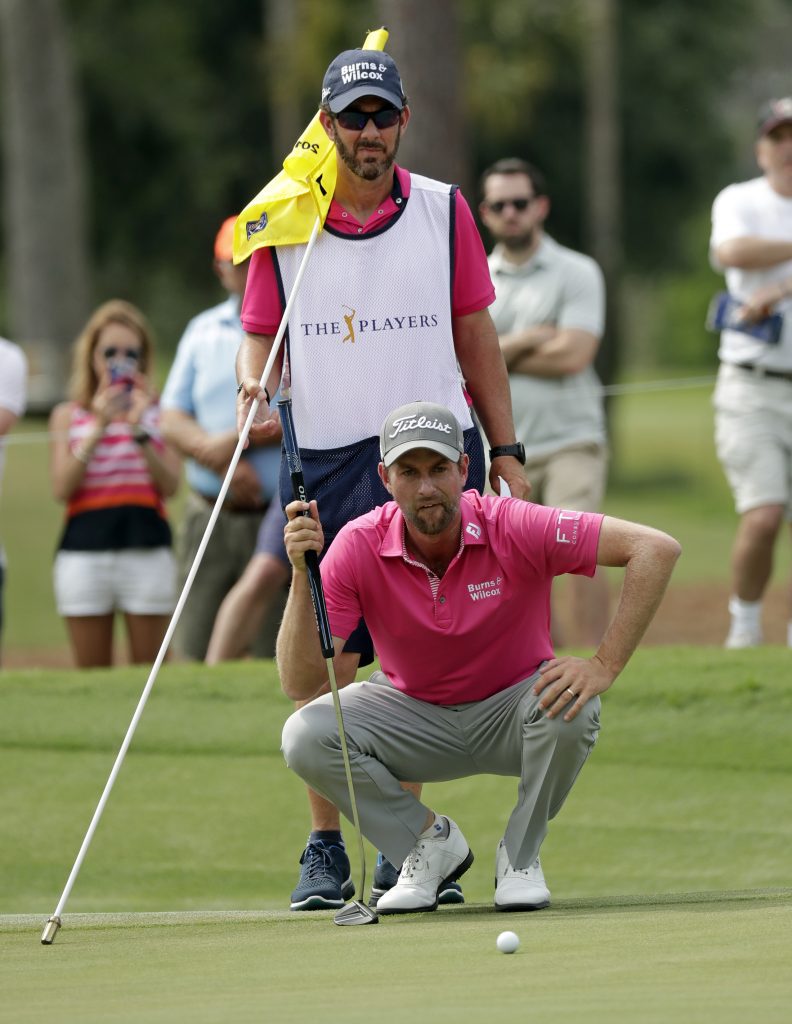
TESORI: That would’ve been THE PLAYERS in 2018. Webb and I had not won in five years. We had been through the putting ban. Webb had battled the putting yips. We had cried a lot during that. We had yelled a lot at each other during that. We had put in so much work and so much effort and remained so positive through a lot of it. I definitely thought, I don’t know if we’ll ever win again. Once we finally figured the putting out — thank you Tim Clark for the little putting tip — once we figured that out, the one tournament I wanted to win the second most in the world was THE PLAYERS. It goes, Augusta first for me, and then THE PLAYERS. I grew up here. That’s my major. I played that golf course before there was grass on it. Before it had even been sodded, I hit balls on 17, and so that’s home. My grandfather taught me the game there. My dad taught me the game there. So to win that, to break a five-year stretch, was the proudest I’ve ever been.
Q: How much do you play now?
TESORI: I don’t get to play as much as I want because of a really bad back. I try to play in at least six tournaments a year. There’re things physically I can’t do anymore, but I try to remind myself I can still do great things mentally. So when I walk off a course and I know I did what I was supposed to do mentally, I get really proud of that. But here’s the reason why I still play competitively. It’s what it reminds me of as far as a caddie goes. Caddies very easily can forget how hard this game is and how emotional this game is. Sometimes you respond the right way with your words, but the right emotion isn’t behind it. When you play yourself and people are looking up your scores and you feel the emotion of a great drive that ends up in a divot, and then you hit it heavy out of the divot and it plugs in a bunker and you make double and you’ve done nothing wrong, you want to break a club, you want to throw a club, you want to curse, you want to do all these things, and it reminds you this is what your player’s going through. So I think it is a necessity as a caddy to play competitive golf tournaments.
Q: This last question might hopefully be your favorite question. The Tesori Family Foundation – is that your greatest legacy, more than those 23 wins?
TESORI: Yes. I love that word, legacy. I think every person cares about a legacy. I think men in particular really think about their legacy a lot. And 2009, we started the foundation. … We really focused a lot on the local homeless shelters, the food banks, anything we could do for those entities. We used to go to a senior center once a month to just encourage our seniors. They’re forgotten about in our society a lot of the time. But then 2014, (our son) Isaiah was born with that beautiful extra chromosome, Down syndrome. So, Mark Brazil (CEO of the Wyndham Championship/Piedmont Triad Charitable Foundation) mentioned to my wife, you guys need to marry golf and the special needs community. So we came up with the All-Star Kids Clinic.
We just did our 60th throughout the country. I am so proud of them. I think we’ve impacted over 1,200 All-Stars and introduced ’em to the game of golf. … We still have a lot of other things that we do with senior centers and homeless shelters and food banks and our Buddy Basket program, but it’s the All-Star Kids clinics that really push us. We’ve given back over $2 million since we started, and for a caddy, for somebody that lost everything they had in ‘10, I know that that’s from the grace of God. We don’t need the credit. It’s a gift that we’ve been put in a situation to give back, and we feel that every day.