





















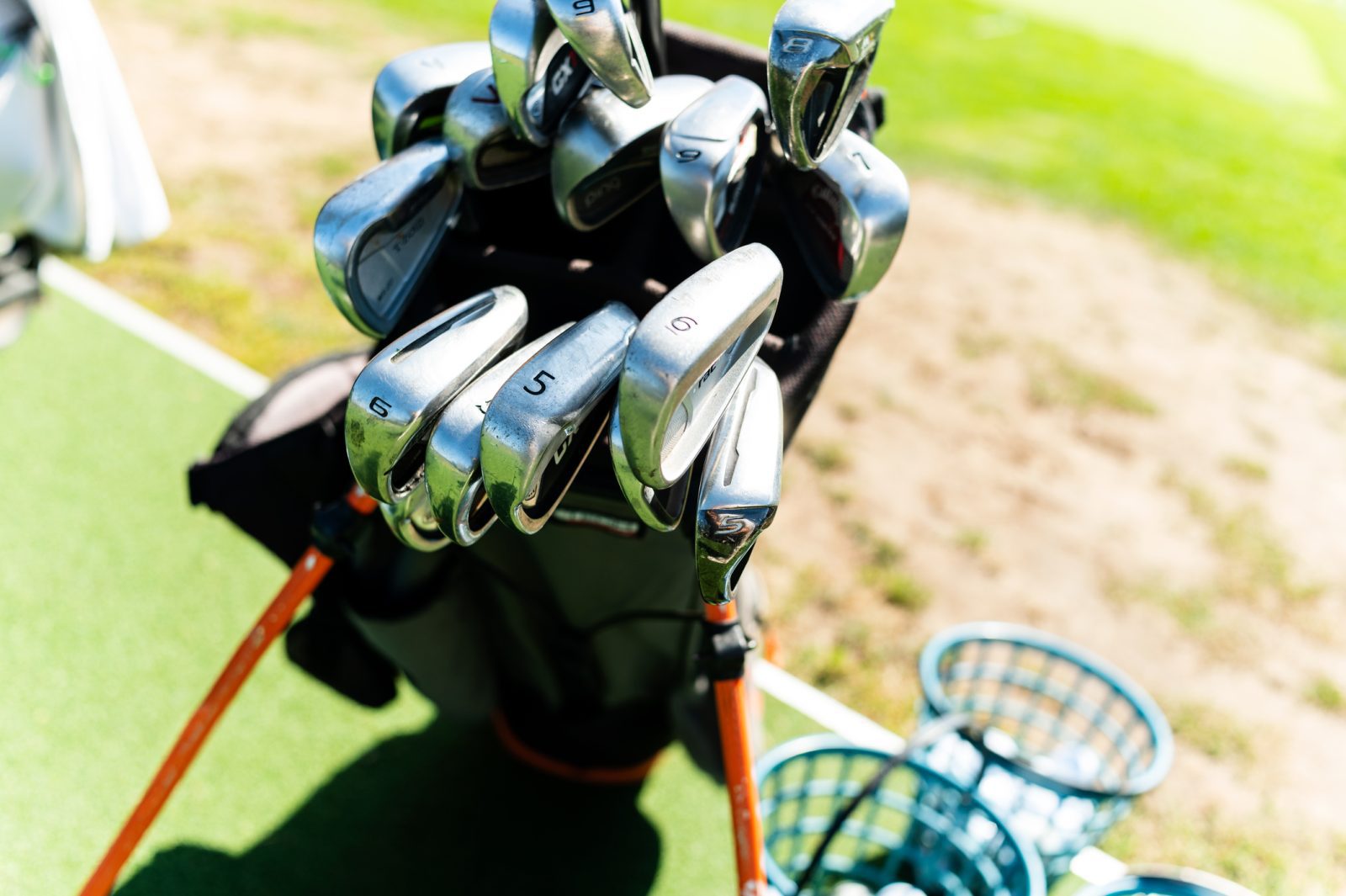
Golf gear in 2025 arrived with a clear mission: make hitting better shots easier, smarter, and more fun. The year delivered a mix of polished evolutionary updates and a few genuinely bold moves — irons that launch higher without feeling gimmicky, drivers tuned by data to squeeze extra yards, and utility clubs that actually fill scoring gaps. Our rundown highlights the most important releases, why they matter, and which kinds of players will get the biggest boost.
The breakout: Titleist T-Series (Irons + Utilities)
Titleist’s 2025 T-Series redefines what a modern iron family can be by offering a model for almost every playing profile — from the ultra-precise T100 to the forgiving T350, with two utility irons rounding out the line. The set blends new face and internal technologies designed to promote higher launch, more consistent spin, and cleaner turf interaction; the range includes a T250 Launch Spec for players who need extra height and the U•505 utility iron for tighter, iron-like control. Availability began in late summer 2025, and the T-Series already showed up on tour, indicating both confidence and real-world performance.
Why it matters: This is one of the most complete iron families launched in years. Players who swap into the right T-Series model gain repeatable distance, better turf performance, and options that bridge the gap between long irons and hybrids.
Drivers that leaned on data: Callaway Paradym Ai Smoke and the wider hot list
Driver development kept leaning into computational design and thinner, more flexible faces. Callaway’s Paradym Ai Smoke variants — including Max and Triple Diamond flavors — continued to surface in top-flight equipment lists in 2025, mixing adjustable weighting with face designs tuned by machine learning to expand the “sweet area.” Independent testing outlets put several 2025 drivers on their hot lists for forgiveness and playable launch windows. For golfers who want both distance and adjustability, these models repeatedly showed up as top considerations.
Why it matters: distance remains king, but consistency is the crown. Drivers that extend the usable face make tee shots less feast-or-famine for mid- and high-handicappers.
Ping G440 family: steady engineering, big forgiveness gains
Ping’s 2025 G440 family — covering drivers, irons, hybrids, and fairways — brought incremental but meaningful improvements: a thinner iron face for speed, longer shafts on long irons for added ball speed, and refined geometries for launch and forgiveness. Ping’s release calendar placed the G440 line early in the year, aimed squarely at players seeking rock-solid reliability and easy launch. The brand’s hallmark fit and finish, plus the option diversity in shafts and lofts, make these clubs instant contenders for bag-overhauls.
Why it matters: for players who value predictability and max forgiveness without a bulky look at address, the G440 family is a practical upgrade with engineered gains.
Utility irons & hybrids that finally fill gaps
2025 continued the trend of highly capable long-game options that sit between fairway woods and long irons. Titleist’s U505 utility iron earned strong reviews for combining iron-like shaping with hollow-body speed tech — useful for players preferring a penetrating ball flight and precise control from tight lies. Meanwhile, brands across the board refined hybrid head shapes and face structures to deliver fuller distances with more forgiveness on thin contacts.
Why it matters: shotmaking versatility increases scoring potential. Players who swap bulky long irons for modern utility options often pick up both consistency and confidence around the course.
Putting and tech: small tweaks, big feel
Putters and tech accessories remained a quieter category this year, but refinements mattered. New putter face materials, improved alignment cues, and subtle weighting changes helped golfers roll the ball truer without dramatic overhauls. On the tech side, companies continued to fine-tune launch monitor-driven fitting tools and AI-assisted fitting experiences — making it easier for recreational golfers to match clubs and shafts to actual swing dynamics. Independent labs and club testers referenced these improvements when updating their 2025 buyer’s guides.
Why it matters: marginal gains with the putter and better-fitting data compound into meaningful strokes saved across a season.
Final verdict
Equipment releases in 2025 read like a pragmatic sprint: technology matured rather than mutated. Titleist’s T-Series sets a new benchmark for breadth and tour-ready performance; Ping continued to iterate on forgiveness and reliability with the G440 family; Callaway’s Paradym Ai variants and driver-hot lists pushed the distance-plus-consistency envelope. The winners aren’t just the flashiest heads — they are the clubs that deliver measurable, repeatable improvement across different swings and course conditions. For the best results, a proper fitting and a check against independent testing data remain the smartest play.
Testing the gear on a launch monitor, sampling multiple shafts, and playing a few holes with each candidate still gives the clearest picture. In a year where refinement dominated, the smartest upgrade is the one that connects — consistently — at impact.