





















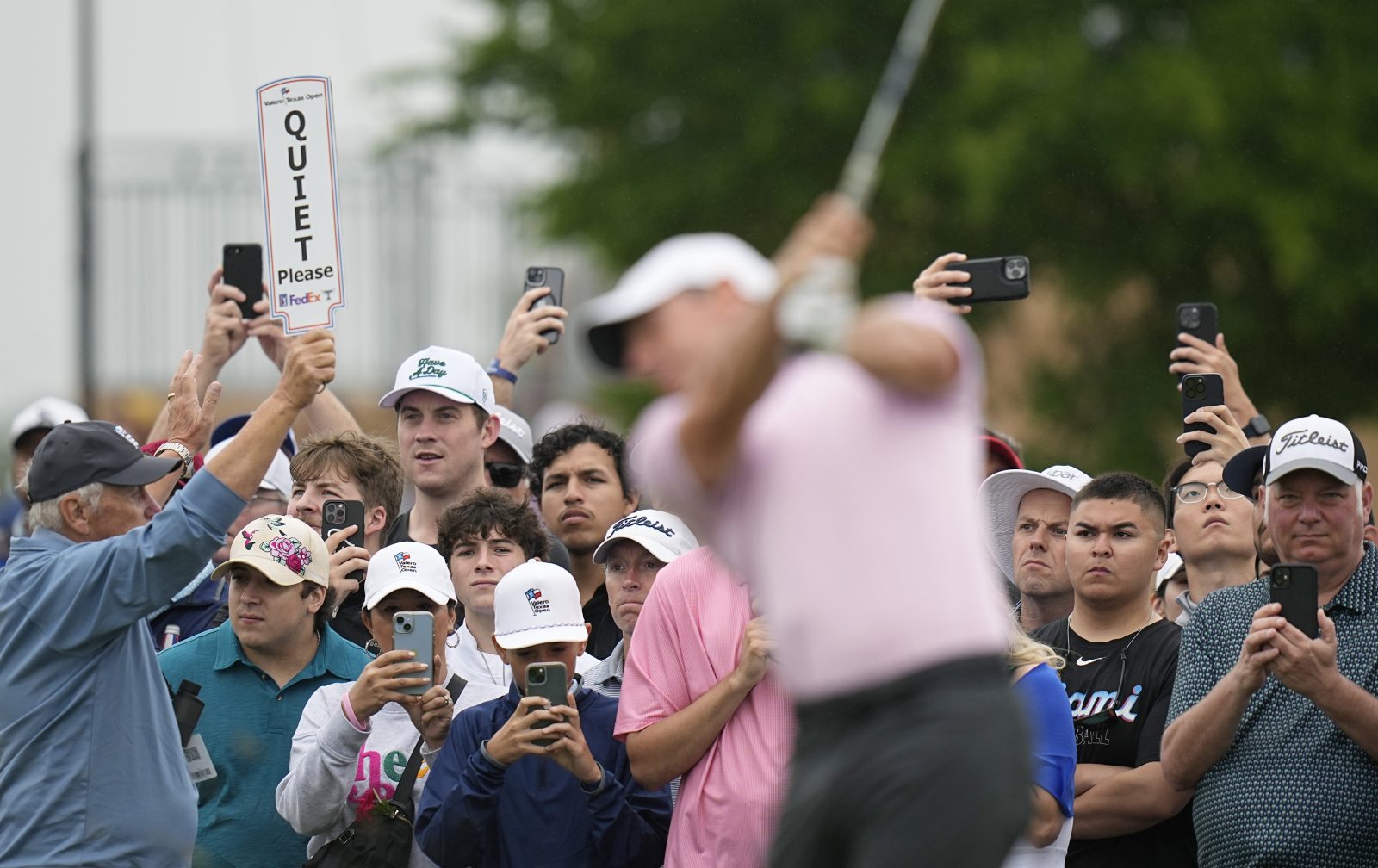
If you’ve ever stood on a golf course just before someone takes a swing, you know the feeling. It’s not just quiet. It’s heavy. The chatter fades. A zipper stops mid-pull. Someone freezes halfway through opening a snack. Even the birds seem to reconsider their timing. The golfer settles over the ball, and for a few seconds, the world holds its breath. That kind of silence doesn’t exist in most sports. In football, noise is fuel. In basketball, it’s momentum. Stadiums are designed to trap and amplify sound, making it an integral part of the spectacle. Players feed off it. Crowds use it to rattle opponents.
But golf flips the script. Silence isn’t background etiquette. It’s part of the competition.
The Swing Happens in a Blink
A full golf swing lasts, what, maybe a second? Just over that if you stretch it. But inside that second is an incredible amount of coordination. Hips rotate. Shoulders unwind. Wrists hinge and release. Balance shifts from the back foot to the front. The clubface has to return to the ball at precisely the right angle, traveling on exactly the right path. There’s almost no room for error.
Unlike sports where you can recover mid-play, golf offers no such grace. Once you start the swing, you’re committed. If something distracts you halfway through — a sudden cough, a camera click, someone whispering at the wrong moment — you can’t pause and reset. The ball is struck whether your focus is intact or not. And that tiny break in concentration? It matters.
Sports psychologists have studied attention and motor control for years. Precision movements, especially under pressure, depend heavily on what’s called “attentional control.” When something unexpected interrupts that focus, even briefly, it can disrupt timing.
In golf, disrupted timing means missed shots. So the silence isn’t ceremonial. It’s protective.
The Quiet Before the Storm
Watch a final-round putt at a major tournament. Thousands of people are packed around the green, but you could hear a blade of grass bend. It’s almost unsettling. That silence does something to the player — it sharpens everything. You become hyper-aware of your breathing, your grip pressure, your heartbeat. The quiet magnifies the moment. It doesn’t distract you; it exposes you.
In other sports, noise can mask nerves. It drowns out internal doubt. In golf, there’s nowhere to hide. The stillness forces you to confront your own thoughts. That’s where the real battle happens. Elite golfers spend years developing routines to manage that internal noise. A practice swing. A look at the target. A slow breath. Another glance. These rituals aren’t superstition — they’re anchors. They give the mind something steady to hold onto when the stakes rise.
Because here’s the truth: silence makes pressure louder. And the player who can stay calm in that quiet gains an edge.
A Different Kind of Crowd
One of the most fascinating things about golf is the role of the audience. In most sports, fans try to influence the game with volume. They scream during free throws. They chant during penalty kicks. They try to shake the confidence of the other side.
In golf, spectators do the opposite. They cooperate. They wait. They hold still. They understand that their silence is part of the performance. It’s almost communal — like everyone has agreed, without saying it out loud, that this moment deserves space.
That collective restraint is rare. And powerful.