





















What About the Rules? Is There a Legal Limit?
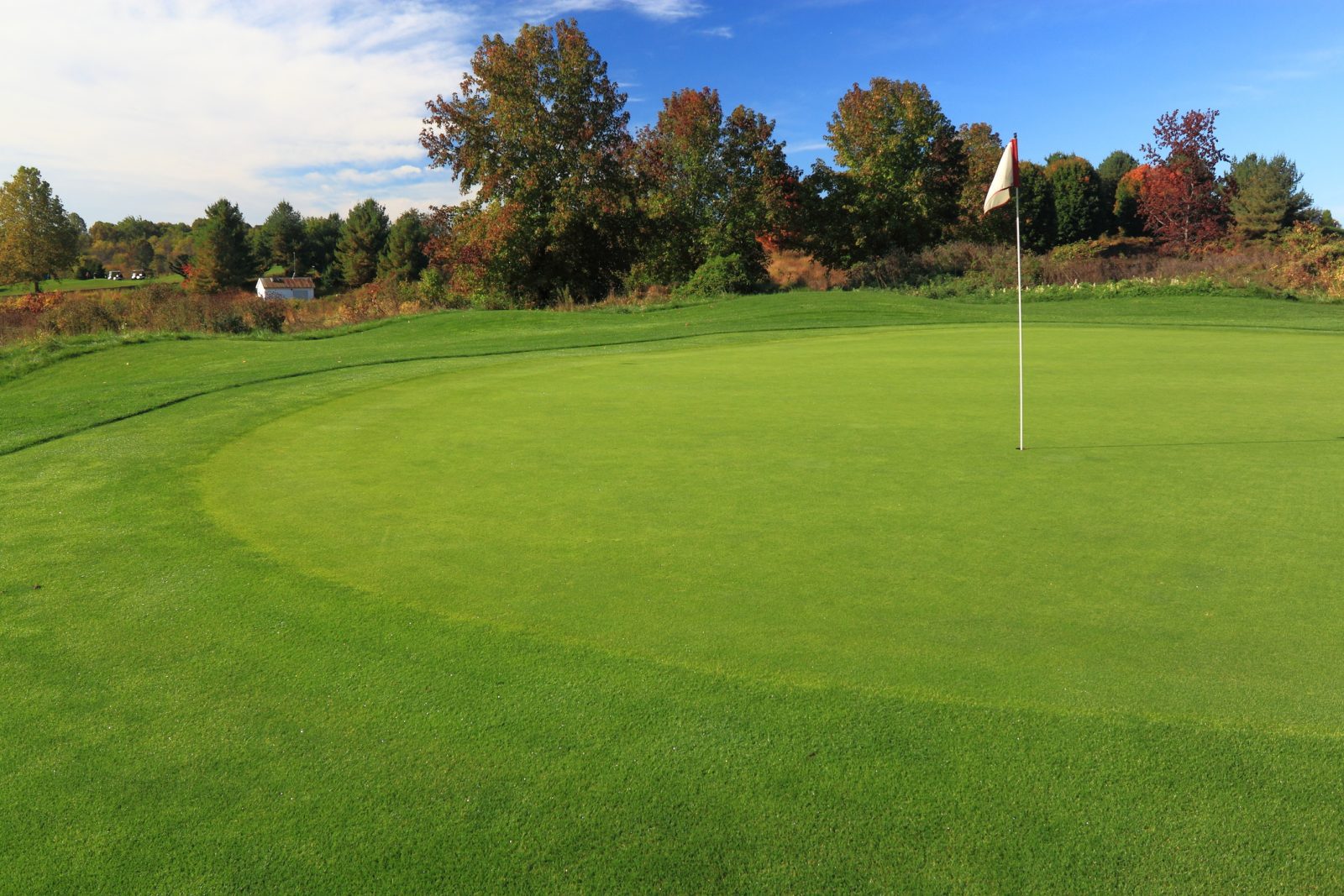
Interestingly, there’s no official minimum or maximum green size in the Rules of Golf. The USGA doesn’t care how big or small a green is, as long as the game can be played fairly.
That said, greens that are too small or too big can create problems in tournament play—especially for pin placements. You need a certain amount of flat area around the hole to allow for a fair putt. Ever tried putting uphill across a ridge with the hole perched on a slope? It’s like trying to stop a shopping cart on an icy hill.
Most courses keep greens within a reasonable range—between 3,000 and 7,000 square feet—because that’s what works best for design, maintenance and player sanity.
Does Size Matter in Putting?
Oh, absolutely. On a small green, you’ll likely be putting from closer distances—but you’ll need to be dialed in with your wedges and short irons. A little off on your approach? You’re chipping or praying.
On a large green, you’re more likely to hit the green from farther out—but you’ll face long, curving putts with enough break to make a pretzel jealous.
Putters dread the dreaded “lag putt” on huge greens. You’re not aiming for the hole—you’re just trying to get it somewhere nearby. Anything under three putts is a win. (Yes, even the pros sometimes settle for that.)
Course Maintenance: The Bigger Picture
There’s another reason size matters—maintenance.
Large greens need more water, mowing, fertilizing and love. That’s expensive. Smaller greens? Cheaper and quicker to manage, but harder to keep consistent.
Some courses shrink greens over time to reduce costs or increase challenge. Others expand them to allow for more pin placements and variety in play. It’s a balancing act—like making pancakes for a crowd. Too big, and you burn the edges. Too small, and nobody gets enough.
So…What’s the “Best” Size?
Trick question. There is no perfect size. It depends on the course’s personality. Quirky courses might lean small and wild. Resort courses might favor big, open greens for a more forgiving experience. Championship-level courses mix both, keeping players on their toes.
And that’s the beauty of it. No two greens are the same. Some are friendly. Some are feisty. Some are like a velvet couch. Others are like a moody cat.
But every green—big or small—is the final chapter of each hole’s story.
The Green, the Myth, the Legend
So how big or small can a golf green be?
In short: 3,000 to 28,000 square feet, and everything in between. Some are postage stamps. Others are turf-covered football fields. Some are fair. Others are tricky.
But all of them? They’re where it all ends. Where the pressure peaks. Where golfers curse, cheer, sweat and fist-pump.
Big or small, the green is where golf happens.