





















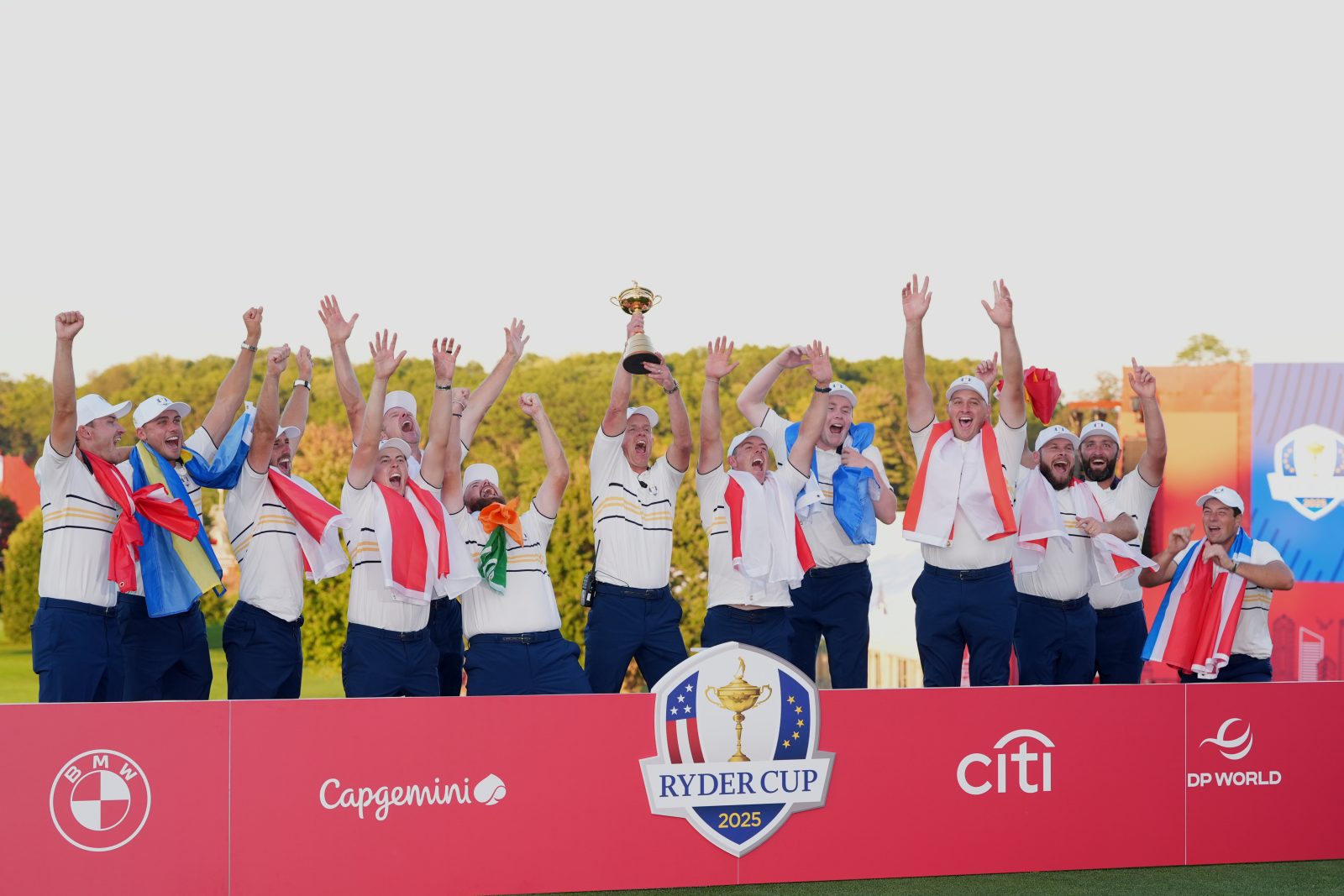
The 2025 Ryder Cup at Bethpage Black will be remembered as one of the most dramatic, instructive, and emotionally charged chapters in modern golf history. Europe defending on American soil and ultimately holding off a U.S. comeback to win 15-13 will be etched in the memory of many. Here’s what we learned, takeaways for players, captains and fans:
A fast start sets the tone (but doesn’t guarantee safety)
From the start, Team Europe took control. They swept the first four team sessions (foursomes and fourballs on Friday and Saturday) 11.5 to 4.5. That’s rare for the visiting team. It showed that getting ahead early in match play isn’t just helpful; it forces your opponent into reaction mode.
But Europe’s experience also proved that even with an 11.5 to 4.5 lead, nothing is safe. The U.S. responded by winning 5.5 of the first 6.5 points on Sunday, nearly pulling off one of the greatest comebacks in Ryder Cup history.
Lesson: Start strong, but keep your guard up – momentum is fragile.
Partnerships and chemistry matter more than star power
In match play, individual brilliance is less important than how well your teammate plays.
Europe’s pairing of Rory McIlroy and Tommy Fleetwood (Fleetwood Mac) was dominant, winning 5 & 4 in the Friday foursomes, among others. Fleetwood went 4-0-0 and was arguably the player of the week.
On the U.S. side, Scottie Scheffler was in the spotlight and struggled all week. He became the first World No. 1 to lose more than two matches in a Ryder Cup and the first American to lose all four opening sessions.
That’s a simple truth: cohesion, complementary styles and calm under pressure often beat raw talent in the Ryder Cup.
Captains must balance strategy, selection and intuition
The captain is a big part of Ryder Cup folklore. Keegan Bradley, the U.S. captain, admitted after the contest that mistakes were made in pairings and course setup.
Part of the criticism was sticking with underperforming lineups and not giving enough room for adjustment. Luke Donald, already a winning captain in 2023, added to his legacy by winning on the road.
One of the controversies was around the “envelope rule” (or “kuvert rule”) when Viktor Hovland withdrew on Sunday due to a neck injury. Because both teams had designated one player to be excluded should such a withdrawal occur, that match was halved automatically. Some U.S. voices felt this was unfair and wanted rule changes.
Captains must not only be tactical but also anticipate the unexpected – and regret the moves that can’t be undone.
Depth wins Ryder Cups
Europe’s win wasn’t built on one or two superstars; it was built on solid performances across the board. While Fleetwood and McIlroy got the headlines, others – like Shane Lowry in clutch moments and Ludvig Åberg (Europe’s only full point in Sunday singles) – stepped up when needed.
Their bench strength meant Europe could absorb fluctuations in individual matches without losing overall rhythm. Some U.S. stars slumped at key moments and the team lacked consistency beyond its few bright spots.
Pressure magnifies split-second decisions
Sunday’s singles were a pressure cooker. Every putt, every choice, every moment mattered. Shane Lowry’s birdie and halve at the 18th hole secured the half-point that kept Europe safe.
On the U.S. side, Russell Henley missed a putt on the last hole to give Europe breathing room.
In this tight space, fatigue, nerves, reading the course and staying focused make or break matches. The smallest error becomes magnified under Ryder Cup lights.
Rule design and fairness must evolve
The envelope rule controversy reopened the broader conversation around rules, fairness and edge cases. When a top player like Hovland has to withdraw due to injury and the match is auto-halved, emotions run high.
Some felt the U.S. was disadvantaged by a rule rarely used but suddenly very important. Instead of pointing fingers, the bigger lesson is that rules must be robust, transparent and fair in all scenarios. Governing bodies may need to review rarely used rules that can decide the outcome.
The comeback myth lives on — but is rare
The U.S. almost pulled off a comeback for the ages. Coming back from 7-1 down and winning 8.5 of the 12 singles is a massive effort.
But Europe’s cushion from the first two days held up. It shows that long-term consistency is more important than a late surge, though the late surge is fun to watch.
Winning away is a statement
Europe’s win in the U.S. was their first away win since 2012 and another chapter in their dominance this century.
Winning on enemy soil is psychological gold. It shows not just technical ability but steel and unity in adversity. Future teams will see that holding serve at home is no longer enough — visiting teams can win.
The 2025 Ryder Cup taught us many things, but above all, that golf, especially match play, is unpredictable, exciting and demanding. Momentum, chemistry, captaincy decisions, depth, nerves, fairness, and the balance of risk and reward all collide under pressure.
Players and captains heading into future Ryder Cups would do well to study Bethpage Black’s lessons: start strong, trust your team, expect volatility, and guard against complacency.